
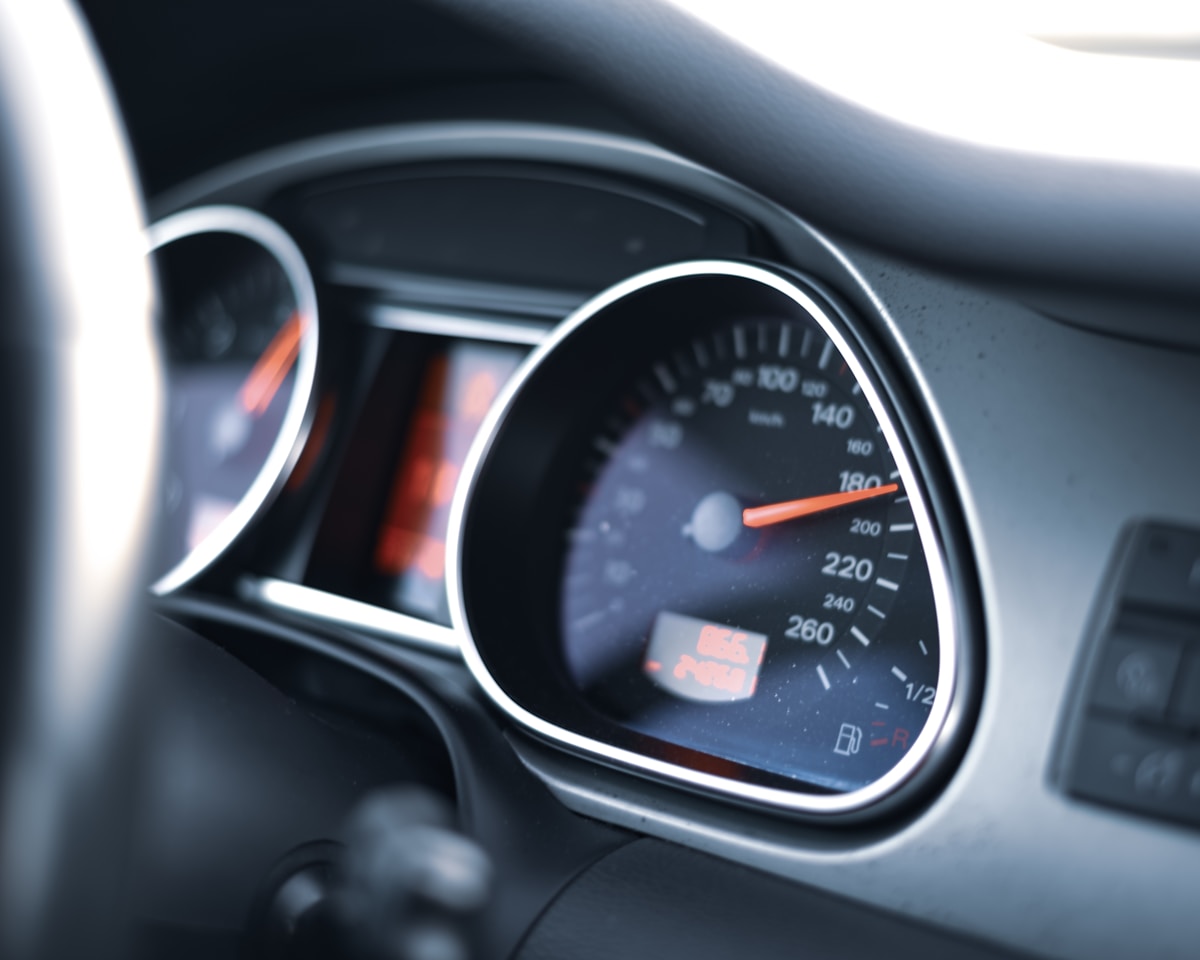
Clocking, winding back the odometer, is one of the most common used-car scams there is, and it is quick and cheap for fraudsters to do. A few minutes with the right tool can wipe tens of thousands of kilometres off the dash and add thousands to the asking price. The good news: once you know what to look for, you can spot it just as fast as they can fake it.
Why Clocking Is So Common
Mileage drives price more than almost any other single number. Two identical cars, one showing 60,000 km and one showing 150,000 km, can differ by thousands of euros, even though they may be mechanically similar. That gap is the entire motive. Modern digital dashboards made it worse, not better: there is no physical wheel to tamper with, just software, and a reset leaves no obvious trace on the screen.
The Wear Test
A genuine low-mileage car looks low-mileage everywhere, not just on the dash. The number can be rewritten in seconds, but physical wear cannot. Check the parts that age with use:
- Steering wheel and gear knob: shiny, smooth, or worn through the finish points to heavy use.
- Driver’s seat bolster: sagging, cracked, or flattened on a car claiming 20,000 km is a clear red flag.
- Pedal rubbers: worn smooth or down to the metal does not match a low reading.
- Carpets and floor mats: thin patches under the heel say more than any number on a screen.
None of this is proof on its own, but a car whose wear screams 200,000 km while the dash whispers 50,000 is telling you something.
The Price Tell
If a low-mileage car is priced suspiciously cheap, ask why before you ask anything else. Fraudsters roll back mileage to lift the value, then price slightly below the market to force a quick, low-questions sale before anyone checks. A car that looks like a bargain on paper is often a bargain built on a lie. Too good to be true usually is.
The Service Gap
Stamps and receipts in the service history are a quiet timeline of their own, and they are hard to fake consistently. Each service records the mileage at the time, so the numbers should climb steadily across the years. A sudden drop between two services, say 120,000 km in one entry and 80,000 km in the next, is a dead giveaway. Cars do not un-drive themselves. Watch too for a suspiciously thin history on an older car: missing paperwork is exactly what a clocker hopes you will overlook.
The Check That Settles It
Eyes can be fooled and stories can be polished; data cannot. A Scan VIN report cross-references mileage readings from thousands of records, inspections, services, registration events, into a single timeline you can read in seconds. If a number ever drops or jumps in a way that does not add up, the report flags it instantly. You just type the plate or 17-digit VIN into one field on your phone, and about ten seconds later the whole mileage history is in front of you, alongside the Scan VIN Score and every other flag from title status to finance. That cross-referenced timeline is the one check that turns a hunch into certainty.
Build the Habit
Make the scan your reflex, not your afterthought. The moment a car interests you, run the VIN before you talk price or warm up to the seller’s story. It costs almost nothing: a 2-day trial is €3.99, then €49.99/month, it renews automatically and you can cancel anytime, so a single weekend of car hunting is easily covered.
Don’t Guess, Scan
You can spend ten minutes inspecting wear and second-guessing the seat fabric, or ten seconds scanning the VIN and knowing for sure. Do the scan first and let the inspection simply confirm what the data already told you. Clocking is fast, but a Scan VIN check is faster, and it is the only one of the two that is on your side.